Shared houses
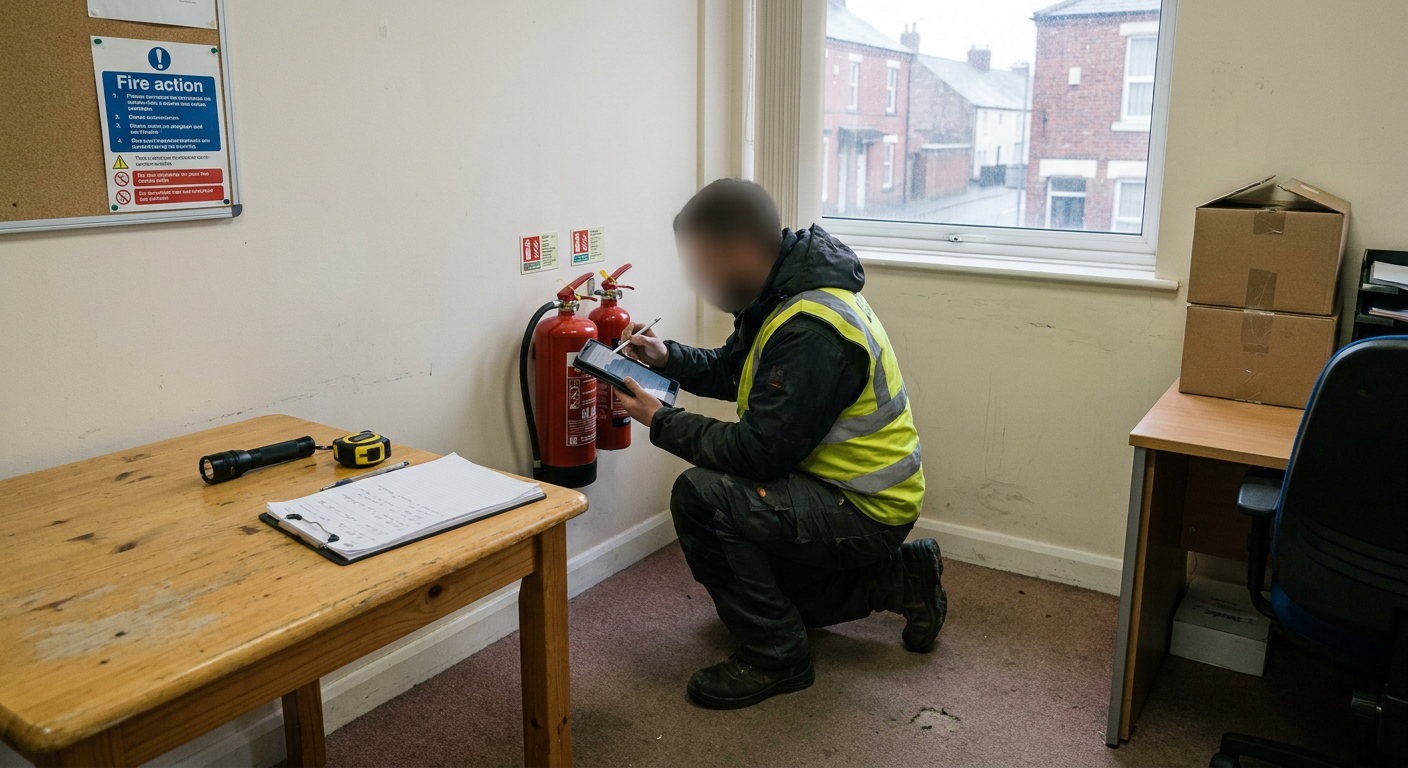
HMO fire risk assessment in Twickenham
Send the details of your shared house and a specialist will confirm what the licensing officer expects to see. There is no charge for that first conversation, so you know where you stand before anything else happens.
Why a shared house needs its own assessment
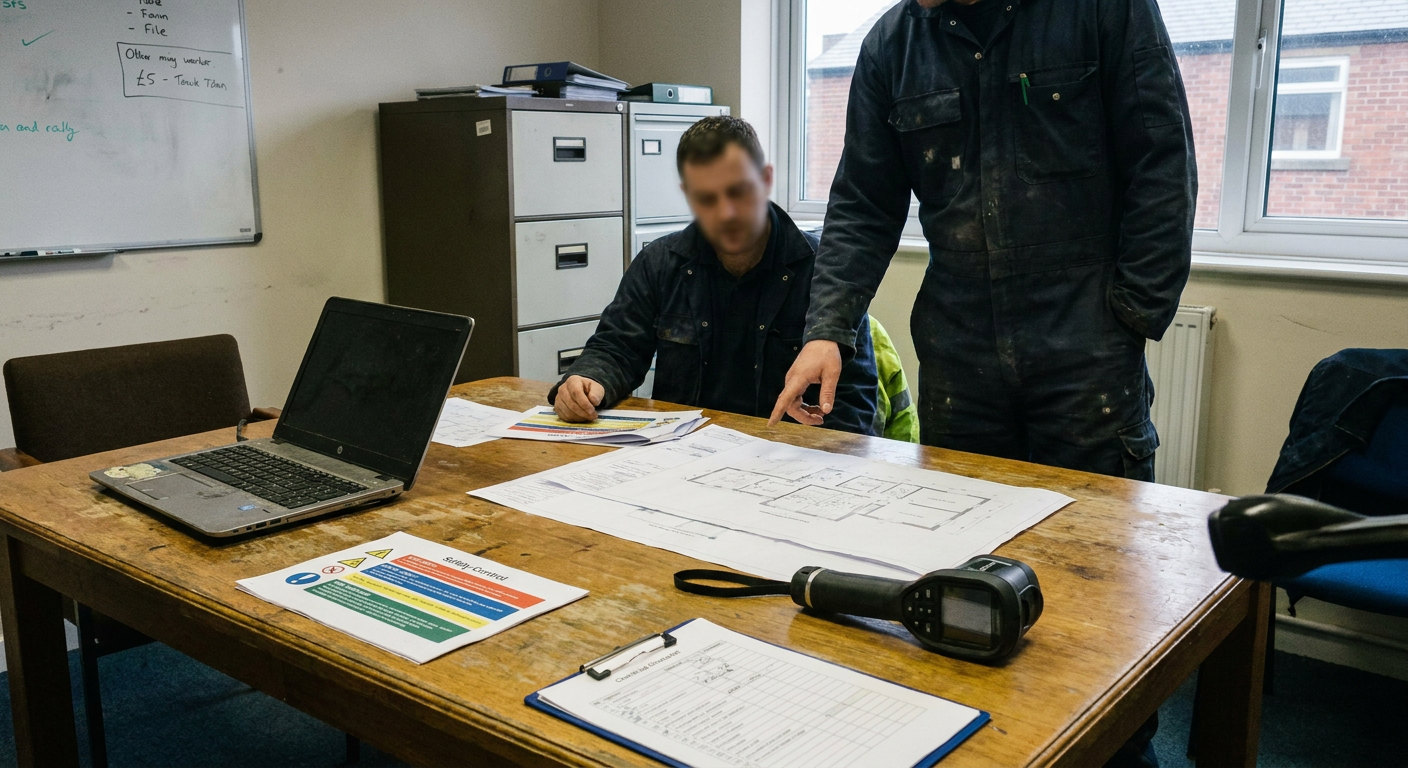
A house let to five sharers in Twickenham sits under specific licensing conditions. Gas safety certificates and electrical installation condition reports cover those systems alone. They do not address escape routes, door ratings or alarm coverage. A separate HMO fire risk assessment Twickenham landlords arrange covers the building itself: how smoke travels, whether tenants can get out, and what the Richmond licensing team will ask to see.
The requirement applies to any property classed as a house in multiple occupation. Landlord fire safety checks Twickenham councils enforce include this document alongside the usual gas and electrical paperwork. Without it, a licence application stalls. A fire risk assessor for rented house layouts examines each floor, noting where compartmentation fails and where detection falls short. The resulting report becomes part of the licence file. You can read more about [HMO licence fire requirements Twickenham](/responsible-person/hmo-licence-fire-conditions-twickenham) sets out for shared homes.
Alarm grade and category for three storeys
Richmond licensing expects a system that matches the size and layout of the house. For a three-storey shared let, that usually means a Grade D1 Category LD2 system. Mains-powered alarms with battery backup sit in the hallways, living room and kitchen, while heat detectors cover areas where smoke alarms would give false readings.
The fire alarm grade for HMO properties depends on the number of floors and the escape route design. A single-storey bedsit arrangement might need less, but a house with rooms spread over three levels requires interlinked units so every tenant hears the warning at once. Bedsit fire door rules tie into this because the alarm only buys time if the doors hold back smoke long enough for people to reach the stairs. A specialist firm will specify the exact category after walking through the property and checking the current wiring. Guidance on [fire strategy](/fire-safety/fire-strategy-twickenham) planning explains how detection fits into the wider escape route.
Replacing bedroom doors or upgrading them
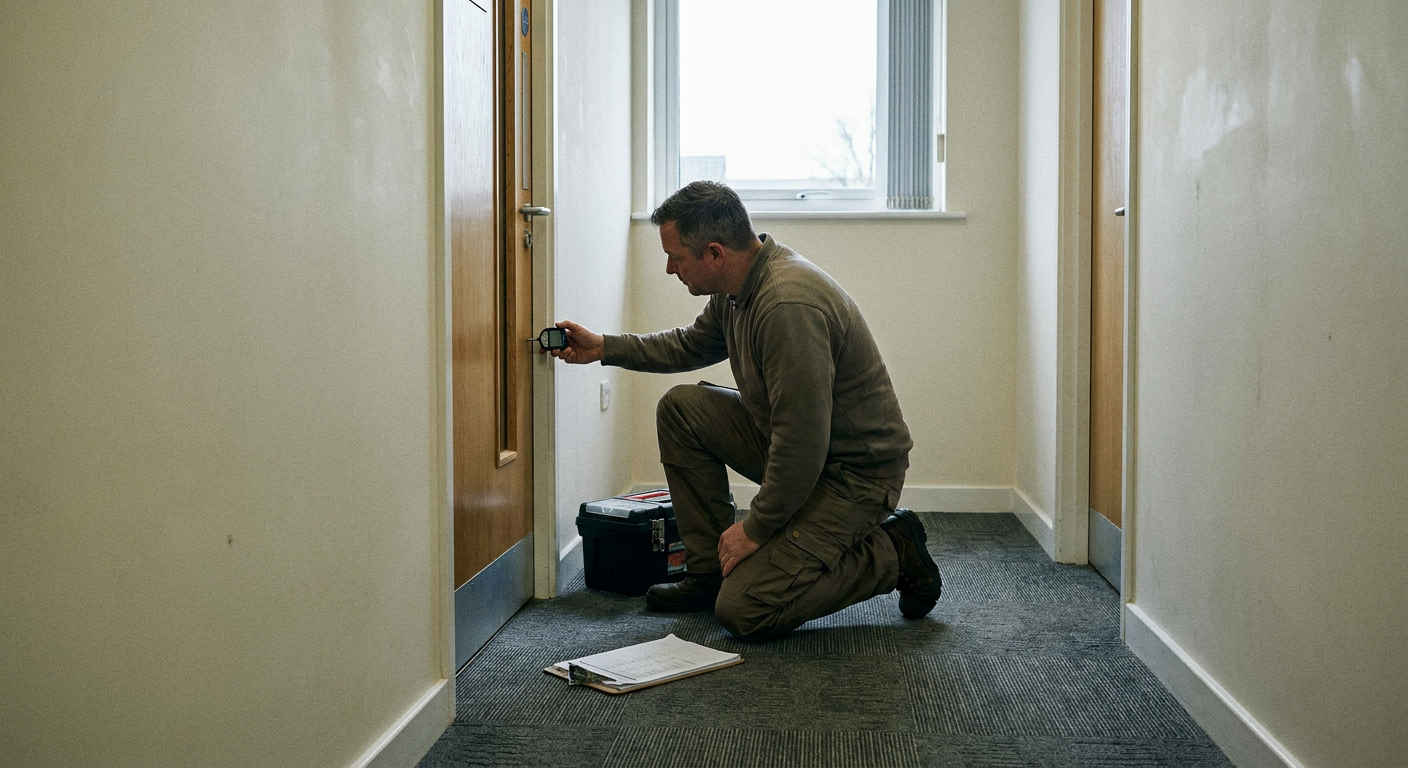
Not every existing door has to come off its hinges. Whether a door can be upgraded depends on its thickness, construction and condition. Bedsit fire door rules require each room door opening onto the escape route to resist fire for thirty minutes and restrict smoke passage. The closer ensures the door shuts after someone passes through. Gaps around the frame matter as much as the leaf itself. A specialist carrying out a [fire door inspection](/fire-safety/fire-door-inspection-twickenham) checks all these points and records which doors pass, which can be modified and which need full replacement. That record forms part of the assessment report submitted for licensing.
What the licensing officer asks to see
On the day of an inspection, the Richmond licensing officer wants proof that the shared house meets its conditions. They ask for the written fire risk assessment, the alarm test log, emergency lighting records if fitted, and evidence that doors carry the correct rating. They walk the escape route from the furthest bedroom to the final exit, checking that nothing blocks the path and that doors close fully on their own.
They also look for a [fire evacuation plan](/fire-safety/fire-evacuation-plans-twickenham) pinned up where tenants can read it. If portable extinguishers or blankets are provided, the officer expects a recent service certificate. Any gaps between the report recommendations and the actual state of the house will be noted. The officer does not carry out the assessment themselves. They read what a third-party certificated assessor holding a Level 4 Award in Fire Risk Assessment produced and verify the building matches it. Keeping these documents in one folder saves time during the visit.
Cost, timing and occupied rooms
A shared house fire assessment Richmond borough landlords commission typically takes between two and four hours on site, depending on the number of rooms and floors. The specialist walks every common area, opens cupboards in hallways, checks loft hatches and inspects each bedroom door. Tenants do not need to move out. The assessment happens while people live there, though the assessor will need access to every room on the day.
Pricing depends on the size of the house and the complexity of the layout. A straightforward five-bedroom terrace costs less to assess than a converted Victorian villa with added partitions. The fee covers the site visit and the written report. It does not cover remedial work. Once the report lands, you decide how to proceed. Details on [arranging an assessment](/responsible-person/arranging-an-assessment-twickenham) explain what information helps a specialist provide an accurate figure before they travel.
Who holds responsibility when an agent manages it
If a managing agent handles the day-to-day running of the house, the legal duty for fire safety still rests with the person who controls the premises. In most cases that is the landlord. An agent can act on your behalf, arranging inspections and hiring contractors, but the ultimate accountability stays with the property owner unless a formal agreement transfers specific duties.
Read about [who is responsible](/responsible-person/who-is-responsible) under fire safety law to understand where liability sits. Both parties should know exactly what the management contract covers. If the agent agrees to maintain the alarm system and fails to do so, the licensing officer still looks to the licence holder first. Clarifying this before the tenancy starts prevents confusion later. Some landlords appoint a [nominated person](/fire-safety/nominated-person-service-twickenham) to handle ongoing checks between formal reviews.
After the report is issued
The report lists what needs doing, ranked by urgency. It does not force you to use any particular contractor. A specialist firm produces the document and hands it over. From there, you or your agent arrange the work. That might mean hiring an electrician to upgrade the alarm system, a carpenter to fit new doors, or a company to install emergency lighting.
Some landlords prefer to handle each trade separately. Others ask their managing agent to coordinate everything. The report gives you the specification needed to get accurate quotes. If the licensing officer set a deadline for improvements, the report tells you which items to tackle first. A [compartmentation survey](/fire-safety/compartmentation-survey-twickenham) might be recommended if the assessor found hidden gaps in walls or floors that standard visual checks cannot confirm. Once the work is done, keep the invoices alongside the original report for your next inspection.
Upgrading doors versus replacing them
Existing doors sometimes meet the standard with modifications, while others must go. The right choice depends on what is already hung.
Door construction
- Upgrade existing doors
- Solid timber of adequate thickness accepts seals and strips.
- Fit new FD30s sets
- Required when the existing leaf is hollow or too thin.
Hardware changes
- Upgrade existing doors
- New hinges, intumescent strips and an overhead closer added.
- Fit new FD30s sets
- Supplied as a complete set with matching frame.
Disruption to tenants
- Upgrade existing doors
- Less time off the hinges, so rooms stay usable sooner.
- Fit new FD30s sets
- Old frame removal means longer work in each doorway.
Certification
- Upgrade existing doors
- Relies on the installer confirming the upgrades meet standards.
- Fit new FD30s sets
- Carries manufacturer certification for the whole assembly.
A specialist inspects each door and advises which approach satisfies the licensing conditions.
Managing the work yourself or through an agent
Both routes satisfy the licensing conditions. The difference lies in who coordinates the trades and holds the paperwork.
Control over contractors
- Landlord arranges directly
- You choose each trade and approve every quote personally.
- Agent coordinates everything
- The agent uses their own contacts and manages the scheduling.
Document storage
- Landlord arranges directly
- Certificates and logs stay in your own filing system.
- Agent coordinates everything
- The agent keeps the compliance folder as part of their service.
Licensing visits
- Landlord arranges directly
- You attend the inspection and answer questions on the day.
- Agent coordinates everything
- The agent meets the officer and presents the required evidence.
Ongoing alarm tests
- Landlord arranges directly
- You remind tenants or visit the house to check the panels.
- Agent coordinates everything
- The agent includes testing in their regular property visits.
A specialist advises which arrangement suits the property after reviewing the management setup.
Ask about your shared house in Twickenham
Send the address and the number of rooms. A specialist will reply with what the assessment involves and what the licensing officer expects. This first step carries no obligation and no fee.
- No obligation
- Local specialists
- Clear next steps