Blocks of flats
Fire Safety England Regulations 2022 for Twickenham flats
Find out what the 2022 regulations require you to do for your block of flats in Twickenham. Send an enquiry about fire risk management and get a clear answer with no obligation to buy anything.
What the Fire Safety England Regulations 2022 mean for flats
Which duties apply to a small block in Twickenham
The fire safety england regulations 2022 added specific duties for anyone who manages a block of flats. If you manage a three storey building off Heath Road in Twickenham, the requirements that apply to you depend on the height of the structure rather than the number of floors.
For any block containing two or more domestic premises, the responsible person must provide residents with fire safety information. You also need to check flat entrance doors and communal fire doors. These block of flats fire safety duties in Twickenham apply regardless of whether the building reaches 11 metres.
A specialist firm can carry out a <a href="/fire-safety/fire-risk-assessment-twickenham">fire risk assessment</a> to confirm exactly which obligations sit with you. The assessor will look at the layout, the escape routes and the condition of existing doors before producing a report.
Flat entrance door checks and how often they happen
The flat entrance door checks landlord duty requires inspections at set intervals. For buildings under 11 metres, the responsible person must use best endeavours to check every flat entrance door at least once every twelve months. Communal fire doors need checking every three months.
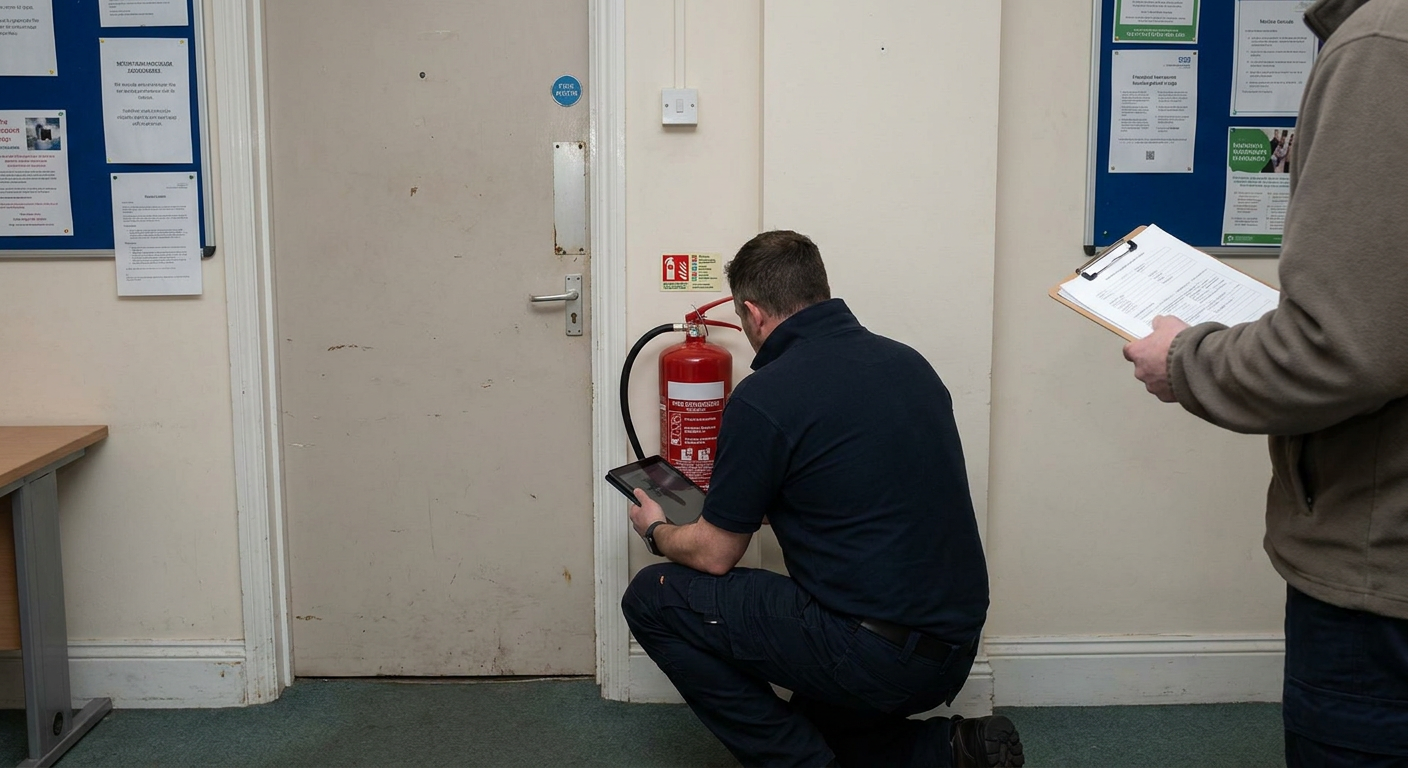
A competent person must carry out these inspections. That usually means a specialist fire door inspector rather than a general maintenance contractor. The inspector looks at the self-closing mechanism, the seals, the gaps around the frame and the hinges. A formal <a href="/fire-safety/fire-door-inspection-twickenham">fire door inspection</a> produces a written record of each door's condition.
If a leaseholder refuses access for a door check, the responsible person must demonstrate they used best endeavours to gain entry. Keep copies of letters, emails and notes of phone calls. Where a resident has fitted their own front door without approval, the inspector will assess it against current fire resistance standards. If it fails, the leaseholder may be required to replace it.
Fire safety information for residents
Every responsible person must give residents clear instructions about what to do if a fire breaks out. This includes how to evacuate, where the assembly point is and why keeping communal areas clear matters. Many managing agents start with a fire safety information for residents template and adapt it to the specific building.
You must hand this information to new residents when they move in and issue it again to everyone at least once a year. Proving you gave it out means keeping a log. Record the date you distributed the documents, the method used and the names of the households that received them.
An up-to-date <a href="/fire-safety/fire-evacuation-plans-twickenham">evacuation plan</a> supports this process. The plan shows the escape routes and the location of firefighting equipment so residents know exactly where to go.
Wayfinding signage and buildings under 11 metres
The wayfinding signage requirements flats must meet only apply to buildings over 11 metres in height. If your block in Twickenham sits below that threshold, you do not need to install floor identification signs or flat indicator signs in the stairwells.
The 11 metre building fire rules draw a hard line. Once a building exceeds that height, the responsible person must place signs inside every staircase that identify the floor number and the individual flats served by that level. The signs must be visible in low light conditions.
Height is measured from the lowest ground level to the top floor surface. A <a href="/fire-safety/fire-strategy-twickenham">fire strategy</a> review will confirm the exact measurement and determine whether the signage requirement applies to your building.
Higher risk buildings and floor plans
A higher risk building stands at least 18 metres tall or contains seven or more storeys. The 2022 regulations place extra duties on these structures. The responsible person must send electronic floor plans to the local fire and rescue service and keep a secure information box on site.
Quarterly checks of all fire doors become mandatory at this height, including the flat entrance doors. The responsible person must also inspect lifts and other key firefighting equipment every month and report faults immediately.
Most residential blocks in Twickenham fall well below the 18 metre mark. But if you manage a taller development near the river or one of the newer builds along the high street, these additional steps apply. A specialist firm can arrange a <a href="/fire-safety/compartmentation-survey-twickenham">compartmentation survey</a> to verify the integrity of fire barriers throughout a larger building.
Who holds the responsible person duties in a leasehold block
Responsible person duties in a leasehold block often cause confusion because several parties hold some control over the building. The freeholder owns the structure. The managing agent runs the day to day maintenance. A residents' management company might hold the lease.
Under the Regulatory Reform (Fire Safety) Order, the responsible person is whoever has control of the common parts. In practice, that usually falls to the managing agent acting on behalf of the freeholder. But if the residents' management company directs maintenance spending, they share the liability.
Read more about <a href="/responsible-person/who-is-responsible">who qualifies as the responsible person</a> to understand where your obligations begin and end. When multiple parties are involved, a written agreement clarifying who handles fire risk management prevents gaps in compliance.
Common questions from Twickenham managing agents
Specific answers to the problems managing agents raise most often about the 2022 regulations.
- Cost and time to comply locally
- Bringing a small block into line depends on the state of the doors and records. A specialist firm will quote after inspecting the building.
- Proving information was given
- Keep dated distribution logs, signed receipts or email delivery records showing when each household received the fire safety instructions.
- Signage for short buildings
- Buildings under 11 metres do not require wayfinding signs in stairwells. Measure from ground level to the top occupied floor to confirm.
- Who pays for non-compliant doors
- Lease terms dictate who funds replacements. If a resident fitted an unapproved door, the cost usually falls to them after formal notice.
- Sending plans to the fire service
- Only buildings over 18 metres or seven storeys must submit electronic floor plans. Most Twickenham blocks are exempt from this rule.
- Refused access for inspections
- Record every attempt to contact the leaseholder. Written requests sent by post and email prove you used best endeavours to gain entry.
Get advice on your block of flats
Send an enquiry about your building. A specialist fire risk management firm will read the details and respond with plain guidance. There is no charge for the initial conversation and no commitment to proceed.
- No obligation to proceed
- Plain spoken guidance
- Local knowledge applied