Twickenham
What gets checked on a fire door
Send details of the block and receive guidance on what needs checking. There is no charge for the initial enquiry, and no obligation to book anything until you are ready.
What gets checked on a fire door during an inspection
Gaps, tolerances and the flat entrance door fire check
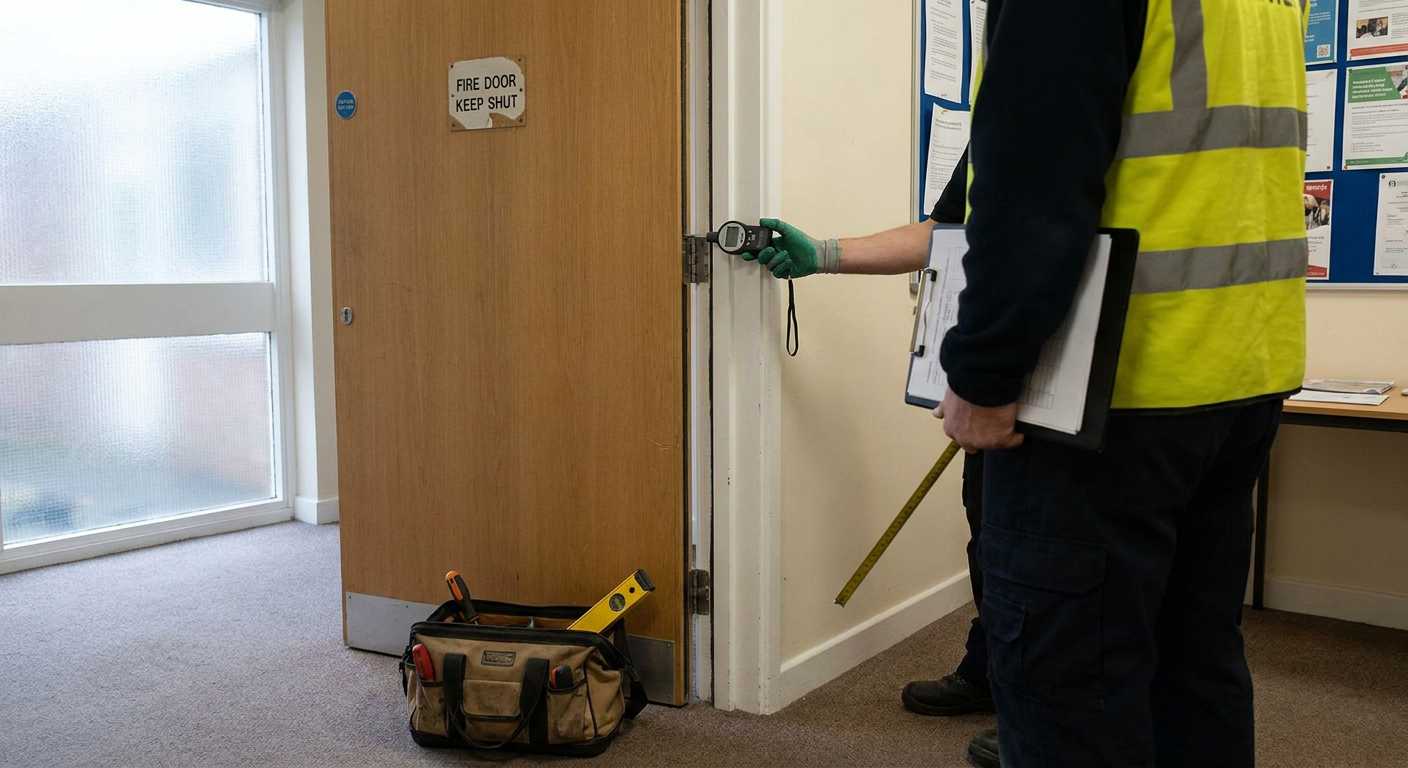
A flat entrance door fire check starts with the gaps around the leaf and frame. The specialist measures these with feeler gauges because even a few extra millimetres let smoke pass through before flames arrive. People often ask what gaps are acceptable around a flat entrance door in a Twickenham block. The standard fire door gap tolerance is usually three millimetres along the sides and top, and no more than eight to ten millimetres at the threshold, though this depends on whether a cold smoke seal or drop-down seal is fitted.
During a fire door survey in Twickenham, the inspector checks every edge. A gap that looks fine when the door is closed might widen if the hinges have dropped or the timber has warped over years of use. These measurements form the basis of the assessment. If the gaps exceed the permitted fire door gap tolerance, the door will fail that part of the inspection. Managing agents arranging a fire door inspection for a block of flats should expect each flat front door to be measured individually, since wear varies from one household to the next.
Hinges, closers and seals without causing damage
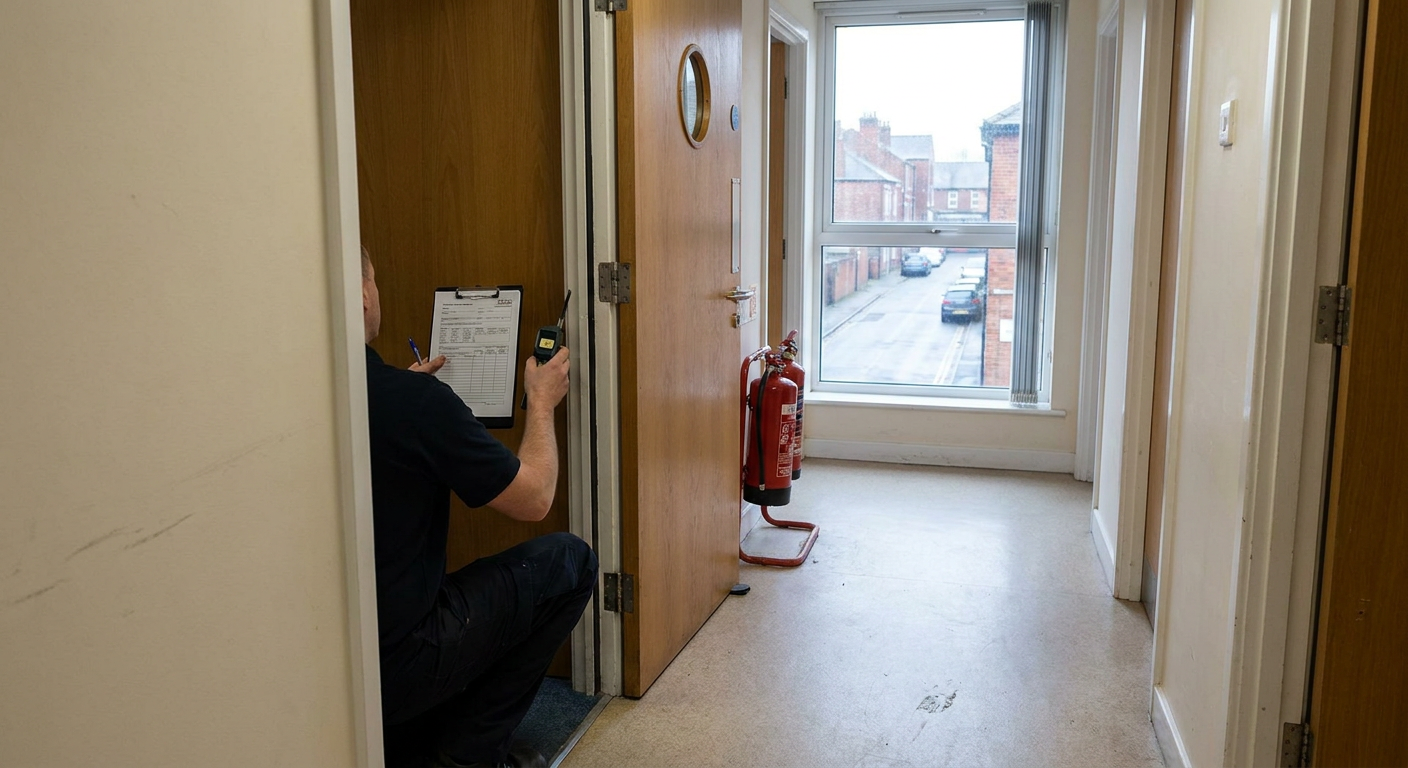
The hardware matters as much as the timber. Hinges must be the correct grade, fixed with all screws present, and free from play. A common question is how the specialist checks hinges, closers and intumescent seals without damaging the door. The answer is visual examination and manual testing. The inspector opens the door, feels for resistance, watches the closer pull it shut, and checks that it latches fully every time. They look at the hinge plates for missing screws or signs of movement in the wood.
Intumescent seals sit in routed grooves or surface-mounted channels. The inspector runs a finger along them to find splits, paint coverage or sections that have fallen out. Cold smoke seals, the brush or blade strips beside the intumescent material, get checked for fraying. None of this requires removing the door from its frame. When a fire door inspection for a block of flats takes place, the specialist works quietly down the corridor, testing each component by hand so residents are not disturbed and the doors stay intact.
Glazing beads, signage and certification marks
If the door has glass, the glazing beads holding it in place must be secure and made from the right material. A bead fixed with ordinary pins instead of screws can fall away in a fire, leaving a hole. The specialist checks that any vision panel carries the correct fire rating mark and that the glass itself matches the door specification.
Signage is the last physical element examined. Doors to stairwells and plant rooms need the appropriate blue mandatory signs, such as fire door keep shut notices. Flat entrance doors in residential blocks do not always require signage, but communal doors do. The inspector notes any missing or incorrect labels. During a broader compartmentation survey, these details feed into the overall picture of how well the building resists fire spread. Every missing sign or wrong bead is recorded. For context on how doors fit into the wider escape route plan, read about [fire strategy for buildings and escape routes](/fire-safety/fire-strategy-twickenham).
Quarterly and annual check intervals for flat blocks
Since the Fire Safety England Regulations 2022 came into force, responsible persons for blocks over eleven metres must arrange quarterly fire door checks on communal doors and annual checks on flat entrance doors. People frequently ask whether communal doors need checking quarterly and flat front doors annually. That is exactly what the regulations require for taller buildings, and many managing agents apply the same schedule to lower blocks as good practice.
A quarterly fire door check is a basic test: does the closer work, are the seals intact, is there obvious damage? The annual flat entrance door fire check goes further, covering the detailed measurements and hardware inspections described above. Keeping to these intervals means problems are caught before they compound. If a resident reports a sticking door in November, waiting until the scheduled spring visit leaves the building exposed. The specialist records each visit date so the responsible person can demonstrate compliance. More detail on the legal duties sits within the [guide to the 2022 regulations for flats](/responsible-person/fire-safety-regulations-2022-twickenham).
Repairing old doors versus full replacement
An old door does not automatically need ripping out. Whether it can be repaired or must be replaced entirely depends on what is wrong with it. Worn hinges, perished seals, a faulty closer or a missing sign are straightforward fixes. The specialist notes these as fire door remedial work items that a competent joiner or maintenance contractor can carry out using compatible parts.
Replacement becomes necessary when the core is damaged, the door lacks any certification evidence and cannot be verified as suitable, or the gaps are too large to close with new seals alone. Painted-over intumescent strips that have expanded and split also mean the door leaf needs changing. After a fire door survey in Twickenham, the report separates minor repairs from full replacements so the responsible person knows where to spend money first. Arranging the fire door remedial work falls to whoever manages the building, guided by the findings.
Responsibility, reporting and what happens after a fail
Who is responsible for the flat entrance door, the leaseholder or the freeholder? In most Twickenham blocks, the lease is the starting point. Often the leaseholder owns the door, but the freeholder or managing agent holds the duty to ensure it meets fire safety standards under the Regulatory Reform (Fire Safety) Order. Clarifying this early avoids delays when work is needed.
After the inspection, the specialist issues a written report with photographs for every door. This gives managing agents evidence they can file and share with residents. Each door receives a pass or fail rating alongside specific notes. If a door fails, the report states exactly why and what must happen next. The responsible person then arranges the repairs or replacement. The specialist who carried out the inspection does not do the remedial work themselves; they provide the information so a separate contractor can price and complete it. For buildings that also need a [fire risk assessment in Twickenham](/fire-safety/fire-risk-assessment-twickenham), the door findings feed directly into that wider review.
What affects the cost of a fire door inspection
Every block differs in layout, age and condition. The specialist considers several variables before quoting for the work, so no two inspections cost the same.
- Number of doors
- More flat entrance doors and communal doors mean a longer inspection and a larger report to compile.
- Access arrangements
- Coordinating entry to occupied flats across a block takes additional time compared to inspecting communal areas alone.
- Door age and type
- Older doors without visible certification marks require more careful examination to determine their fire rating status.
- Reporting detail
- Photographs, individual pass or fail ratings and remedial recommendations add to the documentation workload.
The specialist explains the exact cost for the particular block before any work is agreed.
Ask about a fire door inspection for your block
Send the address and number of flats. The enquiry goes to a specialist firm covering Twickenham who will reply with guidance. Nothing is booked or charged at this stage.
- No obligation to proceed
- Free initial guidance
- Local to Twickenham