Twickenham
Fire safety advice for landlords in Twickenham
Find out what a problem in your home means and what to do about it. Reading these guides costs nothing, and you can send an enquiry only if you decide you need help from a specialist firm.
Understanding Fire Risk Assessments
A fire risk assessment looks at how a fire could start in a building, who might be in danger, and what needs doing to keep them safe. If you have noticed something worrying in your home, like a blocked corridor or missing signage, this is where the answers start.
The guide on [fire risk assessments in Twickenham](/fire-safety/fire-risk-assessment-twickenham) sets out what a specialist firm checks during a visit. It covers the cost and what the report includes so you know what to expect before anything happens.
For landlords renting to multiple tenants, the rules are stricter. The [HMO fire risk assessment guide](/fire-safety/hmo-fire-risk-assessment-twickenham) explains what a landlord must do to meet licensing conditions. Student housing has its own requirements, covered in the [student accommodation fire safety guide](/fire-safety/student-accommodation-fire-safety-twickenham).
Fire Doors and Compartmentation
Fire doors stop smoke and flames moving between rooms or floors. They only work if they close fully and have the right seals. A door that sticks, drags on the carpet or has gaps around the frame will not hold back a fire.
The [fire door inspection guide for Twickenham](/fire-safety/fire-door-inspection-twickenham) explains what a specialist firm looks for in flats and HMOs. It covers the hinges, closers and intumescent strips that make a door function properly. You can also read about [what gets checked on a fire door](/responsible-person/fire-door-checks) to understand the basic signs of wear.
Compartmentation is the wider system of walls, floors and ceilings designed to contain a fire within one area. Gaps around pipes or cables break that barrier. The [compartmentation survey guide](/fire-safety/compartmentation-survey-twickenham) describes how a specialist firm traces these hidden routes through a building.
Escape Routes and Evacuation Plans
Every building needs a clear way out. In a block of flats, that usually means protected stairwells and final exits that open without a key. In a house split into bedsits, the routes are shorter but just as vital.
The [fire strategy guide](/fire-safety/fire-strategy-twickenham) explains how escape routes are planned for different buildings in Twickenham. It covers the logic behind stay-put policies in some blocks and simultaneous evacuation in others.
Once the route is set, people need to know what to do when an alarm sounds. The [fire evacuation plan guide](/fire-safety/fire-evacuation-plans-twickenham) shows how a specialist firm writes instructions for flats and offices. These plans sit near exits so residents and staff can read them quickly.
Training and Responsibilities
Knowing what to do in a fire matters as much as having the right equipment. Staff in shared buildings need basic awareness, while someone must take charge if an alarm goes off.
The [fire safety training guide](/fire-safety/fire-safety-awareness-training-twickenham) outlines what a specialist firm covers in awareness courses for people living or working in Twickenham buildings. For those given specific duties, the [fire warden training guide](/fire-safety/fire-warden-training-twickenham) explains what the role involves day to day and during an emergency.
Someone has to be legally responsible for fire safety in any shared building. The guide on [who qualifies as the responsible person](/responsible-person/who-is-responsible) clarifies whether that falls to a landlord, a managing agent or a freeholder. If that duty feels too heavy, the [nominated person service guide](/fire-safety/nominated-person-service-twickenham) explains how a specialist firm can handle it.
Policies, Equipment and Regulations
Written procedures keep everyone clear on what happens before, during and after a fire. The [fire safety policy guide](/fire-safety/fire-safety-policy-and-procedures-twickenham) describes the documents a specialist firm produces for buildings in Twickenham.
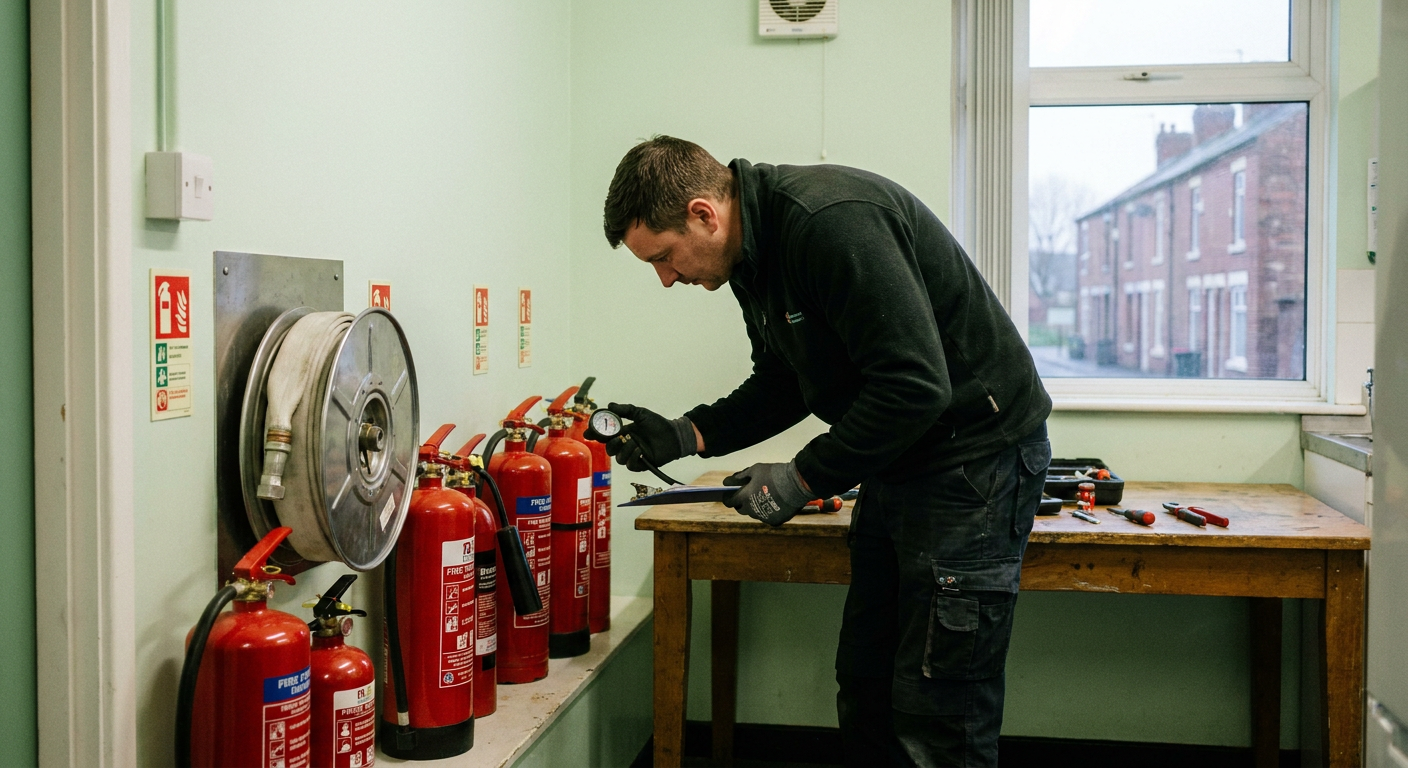
Extinguishers and alarms fail if nobody checks them. The [fire equipment testing guide](/fire-safety/fire-equipment-testing-advice-twickenham) explains what servicing involves and how often a specialist firm should look at each device. Broader compliance is covered in the [health and safety reports guide](/fire-safety/health-and-safety-reports-twickenham).
Rules change. The [Fire Safety England Regulations 2022 guide](/responsible-person/fire-safety-regulations-2022-twickenham) sets out what flat owners and managers must now do regarding information boxes and external wall systems. If the council has already written to you, the [enforcement notice guide](/responsible-person/enforcement-notice) explains what steps a specialist firm takes next.
Guides for Specific Buildings and Areas
Not every building carries the same risks. Flats above shops face problems that detached houses do not, because a fire in the commercial unit below can trap residents upstairs. The [flats above shops guide](/responsible-person/flats-above-shops-twickenham) addresses this specific layout.
Student houses need attention every September before new tenants arrive. The [student term checks guide](/responsible-person/student-term-checks) lists what a specialist firm examines at the start of the academic year.
Fire risk management applies across west London, not just Twickenham. Separate guides cover [Southall](/west-london/southall), [Ealing](/west-london/ealing), [Putney](/west-london/putney), [New Malden](/west-london/new-malden), [Whitton](/west-london/whitton), [Heston](/west-london/heston), [Hatton](/west-london/hatton) and [West Molesey](/west-london/west-molesey). Each page details the common building types and fire risks found in that area.
Ask a question about your home
Send the details of what you have noticed. A specialist firm will read them and reply with plain advice. There is no fee for the enquiry and no obligation to book anything.
- No fee to ask
- Plain advice first
- No booking required
Landlord guides
- Who is responsible
Responsible person fire safety duties explained, from who holds the role in a block or workplace to the checks, records and training it involves.
- Review frequency
A fire risk assessment does not expire on a set date in Twickenham; how often it needs reviewing depends on the building, its use and any changes.
- Arrange assessment
How to arrange a fire risk assessment in Twickenham, from the details an assessor needs to the access required and the report that follows.
- Regulations 2022
The Fire Safety (England) Regulations 2022 set new duties for flats in Twickenham, from door checks to resident information and signage. Find what applies.
- HMO licence
HMO licence fire safety conditions in Twickenham explained: alarms, fire doors, escape routes and the records a council may ask a landlord to show.
- Enforcement notice
An enforcement notice from the fire service sets out what must be put right and by when. Understand the deadlines, appeals and what to do next.
- Fire door checks
What gets checked on a fire door, from gaps and seals to hinges, closers and glazing, so responsible persons know what an inspection looks at.
- Term-time checks
Before a new term starts, student house fire safety checks cover alarms, escape routes, fire doors, kitchens and clutter.
- Flats above shops
Fire safety for flats above shops in Twickenham, covering shared escape routes, separation from the commercial unit and who holds the duties.
- Advice and guides
Fire regulations explained in plain words for Twickenham owners and landlords: who holds the duty, what records are needed and which checks apply.